
Hip Bursitis · Perth Injury & Pain Clinic
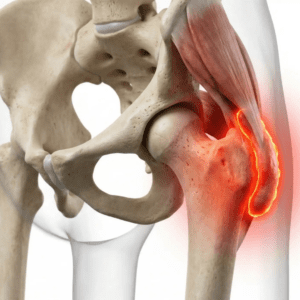
Pain on the outside of the hip is often labelled as “hip bursitis.” However, the irritated bursa may only be one part of the problem.
In many cases, recurring hip bursitis is linked to the nearby gluteal tendons, how the hip is tolerating load, and the positions or activities that keep irritating the outside of the hip.
At Perth Injury & Pain Clinic, we help you understand what is driving your hip pain so your rehab plan is based on the cause , not guesswork.
Free Guide
Why hip bursitis keeps coming back when you only chase inflammation
Free PDF guide
Why hip bursitis keeps coming back when you only chase inflammation
The key reframe
Many people are told they have “hip bursitis” when they develop pain on the outside of the hip. And yes, the bursa can become irritated.
If treatment only focuses on calming inflammation, symptoms may improve temporarily. But if the underlying driver is still present, the pain can return when you go back to walking, stairs, exercise, or sleeping on your side.
Clinical explanation
A bursa is a small fluid-filled structure that helps reduce friction between tissues. The trochanteric bursa sits near the greater trochanter , the bony point on the outside of the hip.
When this area becomes irritated, people may feel pain on the outside of the hip. However, pain in this region is often better understood as part of a broader condition called Greater Trochanteric Pain Syndrome. This commonly involves the gluteus medius and minimus tendons as well as possible bursal irritation.
Anatomy explained
Hip bursitis symptoms are usually felt near the greater trochanter, which is the bony point on the outside of the hip. The bursa, gluteal tendons, iliotibial band and hip muscles all sit close together in this area.
Bursa
A small fluid-filled structure that helps reduce friction near the outside of the hip.
Glute muscles Tendon
The gluteus medius and minimus help stabilise the pelvis and attach close to the painful area.
IT Band Compression
Positions such as side-lying or crossing the legs can compress the outside of the hip.
The missing link
The gluteus medius and gluteus minimus tendons attach near the greater trochanter, which is the same region where hip bursitis symptoms are often felt. These tendons help stabilise the pelvis and control the hip during walking, stairs, running, standing on one leg, and returning to exercise.
When glute tendons become sensitive or overloaded, pain may be felt around the outside of the hip.
Certain positions can compress the outside of the hip and keep symptoms irritated.
Hip and pelvis control can influence how much load the outside of the hip has to tolerate.
Sometimes hip bursitis can involve contribution from the hip joint or lower back.
This does not mean the hip is broken. It often means the hip has not yet rebuilt the capacity to tolerate the demands being placed on it.
Practical aggravators
Hip bursitis often becomes more sensitive when the outside of the hip is compressed or loaded beyond what it currently tolerates.
The goal is not to avoid these forever. The goal is to identify which ones matter for your presentation, reduce irritation, then rebuild tolerance gradually.
Common approaches for hip bursitis often focus on reducing inflammation. These may help symptoms in the short term, but if the underlying reason the bursa became irritated is still there, symptoms can return when normal activity resumes.
Our process
At Perth Injury & Pain Clinic, we do not look at hip bursitis as just an inflamed bursa. We look at the bigger picture.
We identify positions and activities that may be keeping the outside of the hip sensitive, including side-sleeping, compression, walking, stairs, or training load.
We assess glute tendon involvement, hip strength and control, pelvic movement, lower back referral, hip joint contribution, and activity tolerance.
The goal is to progressively reload the hip so it can tolerate more over time, with a plan matched to your presentation and goals.
What to expect
A good assessment should help answer the question: why is this area becoming irritated?
From there, we can build a plan that is specific to your presentation. This is not a generic hip bursitis program or a random list of glute exercises. A plan based on what your hip is actually showing us.
Still researching?
Download our free guide: The Hip Bursitis Mistake. It explains why hip bursitis keeps coming back when you only chase inflammation.
Is this you?
FAQs
Not always. The bursa may be inflamed or irritated, but that does not always explain why the area became painful in the first place. In many cases, hip bursitis involves the nearby gluteal tendons, compression around the greater trochanter, load tolerance, and movement patterns.
They are not exactly the same, but they can overlap. Many cases of hip bursitis pain are now described as Greater Trochanteric Pain Syndrome, which can involve the gluteal tendons and associated bursal irritation.
Not always. Some stretches place the outside of the hip into compression, which may aggravate symptoms in some people. The right approach depends on what is irritating the area and what your hip currently tolerates.
Often, yes , but the type, amount, and intensity of exercise may need to be modified. The goal is usually not to stop moving forever. The goal is to find the right starting point, reduce irritation, and rebuild capacity gradually.
Rest or injection may calm symptoms, but if the underlying driver remains, the outside of the hip may become irritated again when walking, stairs, sleeping positions, or exercise return to normal.
There is no single best treatment for everyone. The right plan depends on whether the pain is mainly related to the bursa, glute tendons, hip joint, lower back, load tolerance, or movement patterns. A thorough assessment helps identify what needs to change.
Consider getting assessed if pain keeps returning, sleep is affected, walking or stairs are painful, symptoms flare when returning to exercise, or you have been told it is bursitis but do not know why it started.
If hip bursitis keeps returning, the next step is not more guessing. A thorough assessment can help identify whether your pain is mainly related to the bursa, glute tendons, hip joint, lower back, load tolerance, or movement patterns.
At Perth Injury & Pain Clinic, we assess the whole picture so we can help guide the right rehab pathway.