
Bursitis is rarely the root problem — it’s caused by something else.
Shoulder bursitis often develops when the bursa becomes irritated from surrounding biomechanical issues — not because the bursa itself is “damaged.” This page explains what shoulder bursitis actually is, why it becomes painful, and how identifying the true underlying cause leads to long-term recovery.
In this podcast episode, we break down why shoulder bursitis is almost always a secondary condition, what typically aggravates the bursa, and how proper assessment can uncover the real movement or load issue behind your pain.
A bursa is a small fluid-filled cushion that sits between moving structures to reduce friction. In the shoulder, the subacromial bursa helps things glide smoothly as you lift your arm.
Shoulder bursitis occurs when this bursa becomes irritated or inflamed, usually from repeated compression, poor load sharing, or altered shoulder mechanics.

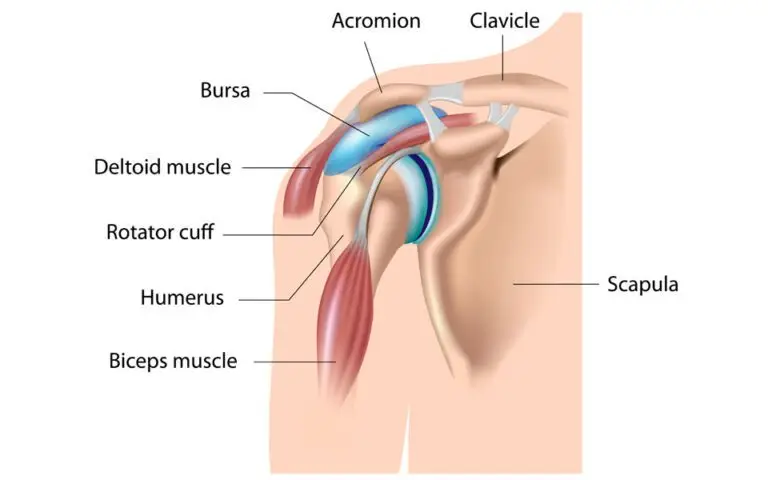
When just one of these isn’t doing its job well, the bursa often becomes overloaded.
Most people think bursitis is caused by “inflammation” alone — but the real driver is typically a movement or loading problem. When the shoulder doesn’t move the way it’s designed to, the bursa can become compressed or irritated.
Common contributors include:




Bursitis is the effect, not the cause.
Fix the underlying mechanics, and the bursa usually settles.
One of the most overlooked contributors to shoulder bursitis is poor humeral head control. If the humeral head drifts upward during arm movement, the bursa becomes compressed.
This video explains why training the humeral depressors is essential for reducing irritation and restoring healthy shoulder mechanics. This video also shows some of the exercises for Bursitis Rehab.
Because bursitis is a secondary issue, the assessment focuses on finding the source of irritation — not just the sensitive area. We look at:
Shoulder range is how far and comfortably the shoulder can move in different directions during assessment and treatment.
Movement quality is how smoothly, safely, and efficiently the shoulder moves during activity.
Pain triggers are the specific movements or positions that cause the shoulder pain to flare.
Posture load is the amount of stress your body position places on the shoulder during daily activities.
Irritating tasks are activities that consistently aggravate or increase the shoulder pain.
Scapula motion is how the shoulder blade moves and supports the shoulder during arm movement.
Finding your unique movement pattern is the key to a precise rehabilitation plan.
Not always. Most cases of bursitis can be diagnosed clinically. Imaging may be helpful only if symptoms are persistent or severe.
Inflammation plays a role, but the bigger problem is usually a movement or loading issue increasing pressure on the bursa.
Some mild cases settle with rest, but if the underlying mechanics aren’t addressed, it often returns.
Not necessarily. The goal is to avoid movements that irritate the bursa, not stop moving entirely.
It varies, depending on what’s causing the irritation. Many people improve steadily once aggravating movements are identified and corrected.