When it comes to preventing back pain, most people think the solution is to “get stronger.” So they hit the gym, load up on planks and sit-ups, and aim to build a tougher core.

But according to spinal researcher Professor Stuart McGill, most people with chronic back pain don’t have weak muscles — they have fatigued muscles. In other words, it’s not strength they’re missing — it’s endurance.

The difference between the two is subtle but critical. Strength helps you lift a heavy box once. Endurance helps you maintain good posture, stability, and movement control through hundreds of daily tasks

Why Endurance Protects the Spine

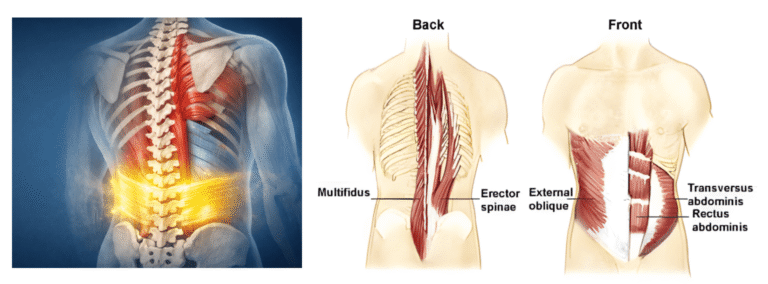
The spine relies on a delicate balance between stability and mobility. When endurance is low, the small stabilizing muscles — like the multifidus, quadratus lumborum, and deep abdominals — tire quickly.

Once that happens, the body begins to compensate. Larger global muscles (like the erector spinae) take over, tension increases, and the spine loses its coordinated stiffness. The result? Micro-movements between vertebrae that can lead to irritation, inflammation, and pain.

McGill’s research found that individuals with healthy backs could maintain low-level spinal stiffness for extended periods, while those with chronic back pain fatigued much faster — even if their maximum strength was similar.

In essence:

Strength is what you can do once.
Endurance is what keeps you safe the rest of the time.

Why Traditional “Core Workouts” Miss the Point

Many people train the core using high-intensity exercises like crunches, leg raises, or weighted sit-ups. These build strength — but they also create repeated spinal flexion, which can wear down the discs over time.

Additionally, these exercises don’t build the sustained control that the spine needs during real life — like sitting upright for hours, lifting groceries, or standing on uneven ground.

McGill’s approach instead focuses on low-load endurance training, emphasizing proper muscle activation and consistent control rather than max effort or exhaustion.

The McGill “Big 3” — Endurance Training for the Spine

To target endurance and stability without excessive spine stress, McGill developed the Big 3 exercises:

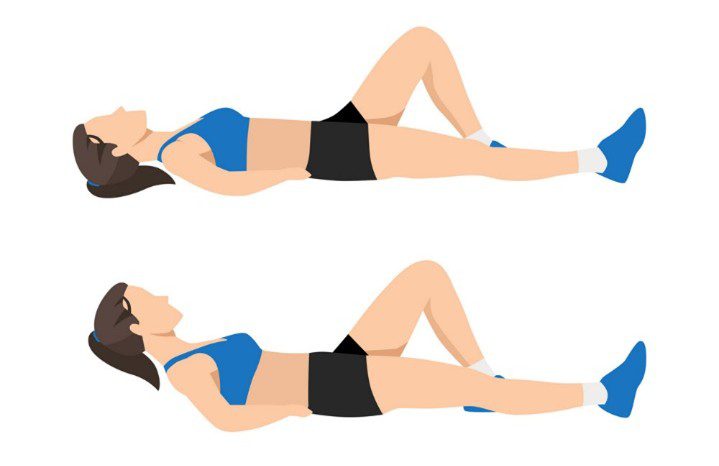
1. MODIFIED CURL UP

o Keeps the lumbar spine neutral while training the front stabilizers.
o Builds the ability to brace the core without spinal flexion.
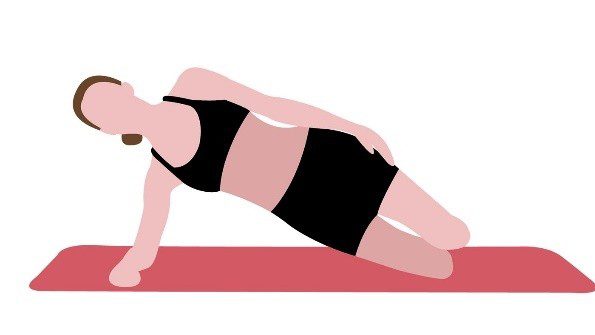
2. SIDE PLANK

o Develops lateral endurance and hip stability.
o Reduces asymmetries that can cause uneven spinal loading.
Picture3

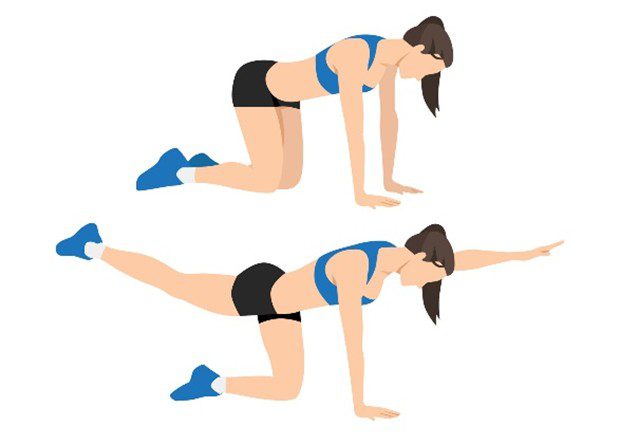
3. BIRD DOG

o Trains the posterior chain and coordination between opposite limbs.
o Reinforces core control during movement — essential for daily function.

Performing these exercises with precise form and controlled breathing builds the endurance your spine needs to stay stable during all activities.

The Endurance-to-Failure Problem

Another common mistake is training the core to failure. When stabilizing muscles fatigue completely, they lose their ability to protect the spine — creating the very instability that causes pain.

Instead, endurance training should stop well before breakdown. The goal isn’t exhaustion — it’s to build repeatable, high-quality effort. Over time, the “capacity” of the spine increases, and the same daily tasks become effortless.

Practical Applications

  • At work: If you sit for long periods, take standing breaks to re-engage your postural stabilizers.
  • During exercise: Prioritize controlled, low-load movements over maximal efforts.
  • In daily life: Think about maintaining tall, braced posture throughout the day — not just during workouts.

Endurance isn’t glamorous, but it’s the foundation for movement longevity.

KEY TAKEAWAY

Your back doesn’t need more brute strength... (click for more)

It needs lasting support.

By training endurance in your spinal stabilizers, you create a system that can handle life’s repetitive demands without collapsing into pain. Remember: strength is what gets you moving; endurance is what keeps you moving well.

If your back pain keeps returning despite “getting stronger,” the missing piece might be endurance.

Book your Spinal Endurance Assessment Today 👇

Leave a Reply

Your email address will not be published. Required fields are marked *

Share:

MORE POSTS

Send Us A Message