Knee Pain / Patellofemoral Pain
Mount Lawley • Perth Injury & Pain Clinic
Knee pain on stairs, squats or runs?
Pain around or behind your kneecap can make everyday movement and the activities you enjoy harder than they should be.
At Perth Injury & Pain Clinic, we assess your knee and relevant contributing factors, then build a personalised rehabilitation plan around your goals.
Click the booking button to secure your appointment today.
149 Walcott Street, Mount Lawley • (08) 6331 7783

Recognise the pattern
Patellofemoral pain,sometimes called patellofemoral pain syndrome or “runner’s knee”,usually involves discomfort around or behind the kneecap. You do not have to be a runner to develop it.
Sounds alone do not confirm a problem. Painless knee clicking is common. These symptoms can also occur with other conditions, so an assessment matters.
FREE PATIENT GUIDE
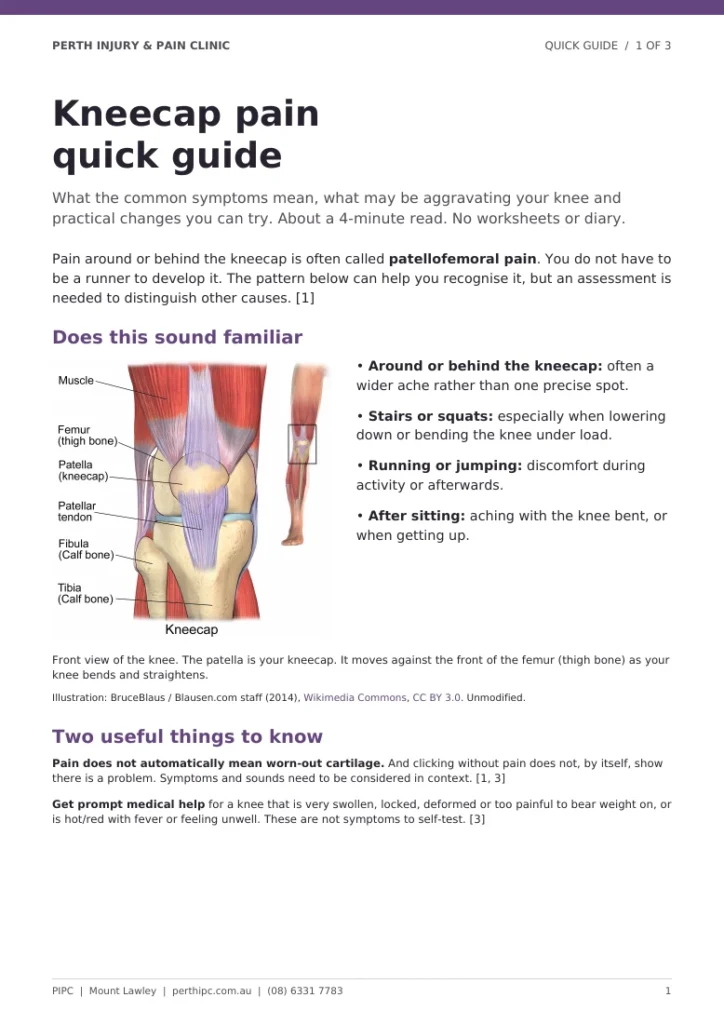
Not ready to book yet? Start with our free Kneecap Pain Quick Guide.
A short, three-page read with a labelled knee illustration. No worksheets or diary.
Enter your name and email address. We will email you the guide and open it straight away.
We use your details to email this guide and record your request. This does not subscribe you to marketing emails.
The patellofemoral joint is where your kneecap (patella) meets the groove at the front of your thigh bone (femur). As the knee bends and straightens, the kneecap moves relative to this groove and helps your thigh muscles straighten the knee.
Loading this joint is a normal part of stairs, squatting and running. Symptoms can develop when the demands placed on the knee exceed what it can currently tolerate. This may follow an increase in activity, a return after time off, or a combination of contributing factors.
Patellofemoral pain does not, by itself, mean your cartilage is worn out or your kneecap is “out of place”.
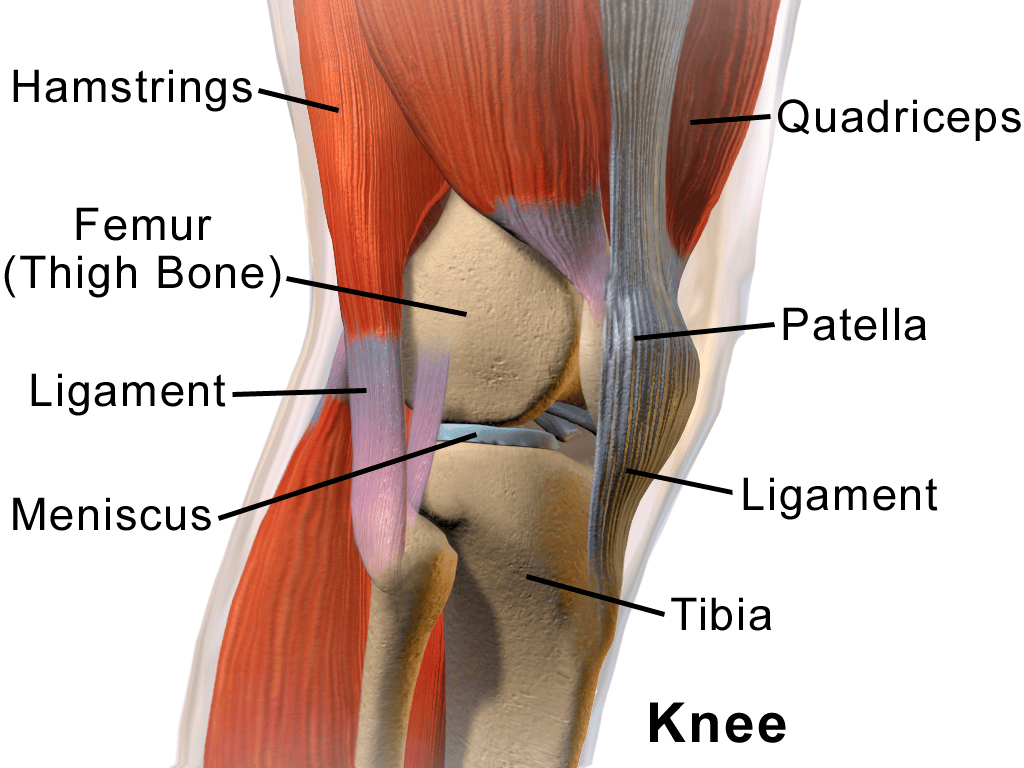
Illustration: BruceBlaus / Blausen.com staff (2014), Wikimedia Commons, CC BY 3.0. Unmodified.
Understand what is driving it
There is rarely one explanation that fits everyone. Possible contributors worth assessing include:
These findings are not automatic proof of the original cause. For example, weakness can develop after pain begins. We assess which factors are relevant to your symptoms rather than assuming that a “muscle imbalance” or knee position explains everything.
Your knee is the starting point. Where appropriate, we also assess hip and ankle function, the lumbar spine and other factors that could contribute to your presentation. Pain referred from the hip or back is a different possibility to local patellofemoral pain, and needs to be distinguished during assessment.
Our aim is to identify the main drivers of your knee aggravation,the factors you may think of as the “root causes”,and use those findings to guide a practical plan.
Your rehabilitation journey
Rehabilitation is a process, not a standard list of exercises. Your symptoms, assessment findings and progress guide what happens next.
01
We begin with a detailed history: when your pain started, what aggravates it, previous injuries, activity changes and what you want to get back to. A thorough assessment considers the knee and relevant hip, ankle, lumbar and other contributions.
02
We explain the findings and agree on manageable changes to the activities that currently provoke your knee. The goal is to find a tolerable starting point while keeping you as active as appropriate.
03
Your plan addresses the relevant findings. Education and progressive knee strengthening form the foundation, with hip strengthening where appropriate. Hands-on treatment, taping or movement changes may support this when useful; they do not replace rebuilding capacity.
04
We review your response and adjust the demands as you improve. Progress is based on how your knee handles everyday tasks and increasing activity, rather than simply advancing a programme because another week has passed.
05
We gradually prepare you for the demands that matter to you: stairs, work, the gym, running or sport. You leave with a clearer strategy for managing activity changes and maintaining the capacity you have built.

More than short-term relief
A quieter knee is a useful step. The bigger goal is being able to do more with confidence.
Your plan can progress from everyday movement towards the demands of your work, exercise or sport. We explain why each stage matters and review how you are responding along the way.
Learn more about our soft tissue occupational therapy and sports and running rehabilitation.
No. Patellofemoral pain describes a clinical pattern of pain around or behind the kneecap. Arthritis is a different diagnosis, although symptoms may overlap. Your assessment helps distinguish possible causes of knee pain.
Usually, an assessment is the starting point. Patellofemoral pain is generally identified from your history and examination. If your symptoms suggest another condition or further investigation is appropriate, we can discuss imaging referral.
That depends on your symptoms and how your knee responds. Some activities may need temporary changes in volume, intensity or range. We help you find a manageable level and build back progressively, rather than assuming everyone needs complete rest.
There is no single timeline. Duration depends on how long you have had symptoms, current capacity, activity demands and your response to rehabilitation. We set realistic milestones and review progress; we do not promise a fixed number of sessions or a guaranteed result.
They may be relevant, which is why we assess beyond the knee when indicated. A finding in another area does not automatically make it the cause. We consider whether it affects your knee loading or whether symptoms could be referred from elsewhere.
Click any Book a Knee Assessment button on this page to book at our Mount Lawley clinic. If you are new to PIPC, select the initial Soft Tissue Occupational Therapy consultation. If you are unsure, call (08) 6331 7783 and our team can help.
Seek urgent medical assessment if your knee is hot and red with fever, you cannot bear weight or move it, or it becomes severely swollen, deformed or locked,particularly after an injury. These symptoms should not be assumed to be patellofemoral pain.
Mount Lawley
Understand what is aggravating your knee and start a personalised plan to rebuild the activities that matter to you.
Perth Injury & Pain Clinic
149 Walcott Street, Mount Lawley, Perth WA
This page provides general information and does not replace an individual assessment. Our rehabilitation approach is informed by current evidence and tailored to your presentation.
Clinic photography: PIPC website media collection. Knee anatomy illustration: BruceBlaus / Blausen.com staff, CC BY 3.0, credited beside the image.
