Shoulder Pain / Rotator Cuff Tears
Mount Lawley • Perth Injury & Pain Clinic
Told you have a rotator cuff tear? Surgery is not automatically your next step.
Whether reaching overhead hurts, lifting feels weak or shoulder pain is interrupting your sleep, the next step is to understand how your shoulder is functioning and what it needs.
At Perth Injury & Pain Clinic in Mount Lawley, we assess partial and full-thickness rotator cuff tears and build a rehabilitation plan around everyday life, gym training, work and sport.
149 Walcott Street, Mount Lawley
Call (08) 6331 7783
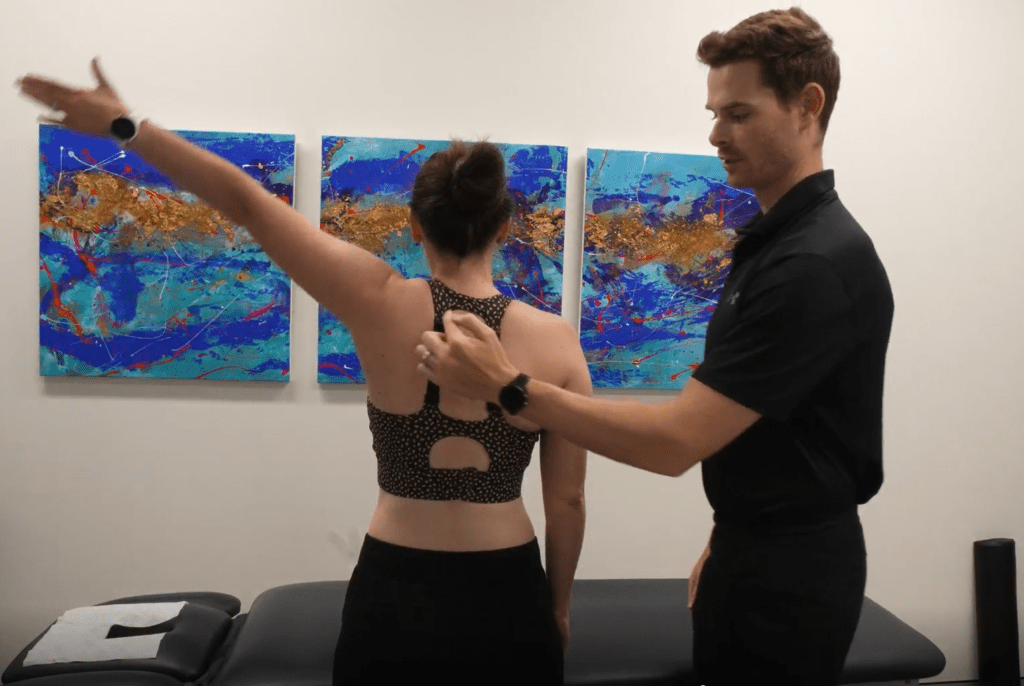
Many people with rotator cuff tears improve with rehabilitation without having surgery. That includes some people with full-thickness and larger tears. The decision depends on more than the scan: how the injury happened, your strength and movement, your goals and your response to treatment all matter.
In a large prospective study of people with atraumatic full-thickness tears, over 70% managed without surgery over 10 years following an initial rehabilitation programme. This finding does not apply automatically to a fresh traumatic tear or every large tear. [1]
Our aim is to help you make an informed choice and rebuild useful shoulder function.
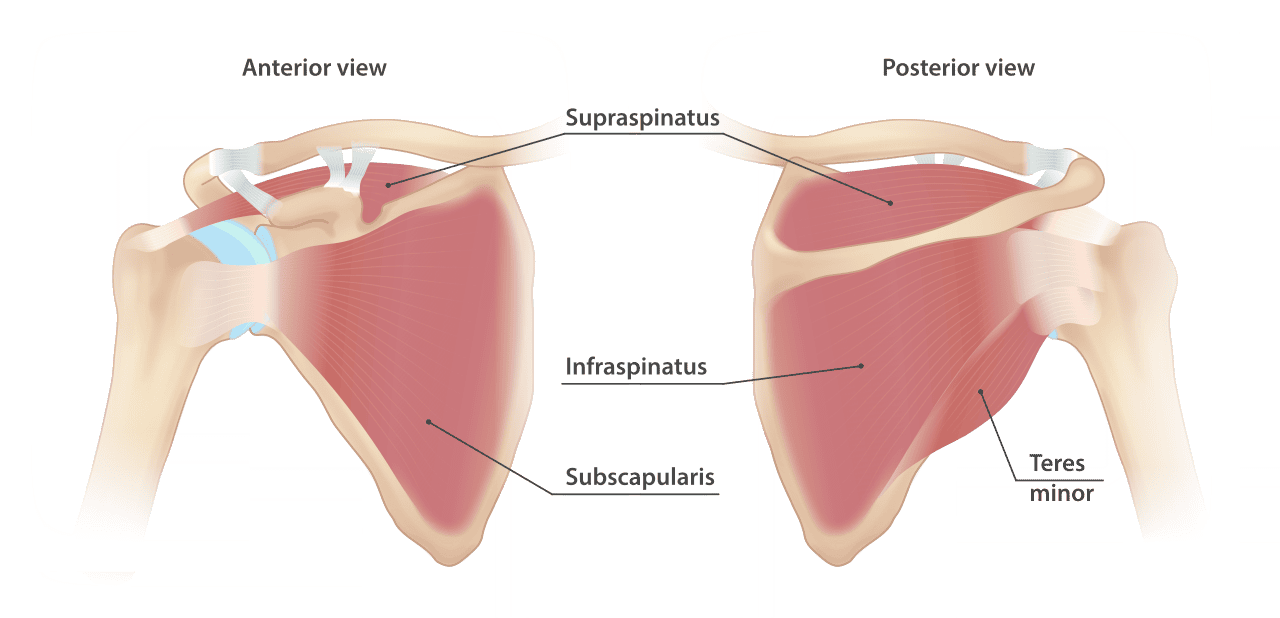
The rotator cuff is a group of four muscles and their tendons that help move and stabilise your shoulder. A tear involves damage through part or all of the thickness of one or more of these tendons.
Partial-thickness tear: the tear extends through part of the tendon thickness.
Full-thickness tear: the tear extends through the entire tendon thickness at the affected area. This does not necessarily mean the whole tendon has detached across its entire width.
Terms such as “large” and “massive” describe the extent of the tear. They are different from the distinction between partial and full thickness. [4]
A rotator cuff tear may cause:
Some tears cause little or no pain. These symptoms can also occur with other shoulder conditions, so symptoms alone cannot confirm a tear. [4]
Sudden weakness or difficulty lifting your arm after a fall, dislocation or other injury needs prompt medical assessment. Do not simply wait through a rehabilitation programme before having that checked.
A fall onto the arm, a shoulder dislocation or a sudden heavy load can tear a tendon. An acute injury can also worsen a pre-existing tear.
Many tears develop gradually as tendon tissue changes with age. Repeated shoulder loading at work or in sport can also contribute. A person may notice pain after a change in activity even when the tear itself has been present for some time. [4]
We distinguish between what may have caused the tendon damage and what is currently aggravating your shoulder. Training load, strength, movement options and work demands can be relevant to rehabilitation without being the sole cause of the tear.
Your assessment starts with a detailed history: how symptoms began, any injury, the tasks that provoke pain, sleep, previous treatment and what you want to get back to.
We then assess the factors relevant to your presentation:
This helps us identify the mechanisms and contributing factors that can be addressed, rather than only treating the painful area. There is no single movement pattern or posture that explains every rotator cuff tear.
If imaging is needed, we discuss the appropriate pathway through your GP or specialist. Existing ultrasound or MRI findings are considered alongside your assessment, rather than used in isolation.
Your plan progresses according to symptoms, movement, strength and function. These stages can overlap, and the pace depends on your tear, health, goals and response.
We explain the assessment findings, clarify what your scan does and does not tell us, and agree on practical goals. We also identify whether medical or surgical input is needed alongside rehabilitation.
We help you adjust the activities and loads that repeatedly flare your shoulder while maintaining appropriate movement and activity. Where applicable, manual therapy or dry needling may be used to help manage symptoms. These are supporting treatments, not methods of repairing a torn tendon.
Progressive exercise rehabilitation develops the shoulder’s available strength and capacity. We address relevant shoulder mechanics, scapular function and mobility findings, tailoring the programme to what your shoulder can tolerate. This is an active rehabilitation process, rather than a fixed list of exercises for everyone.
As you progress, we increase the demands needed for your daily tasks, gym sessions and work. Progression considers movement quality, strength, endurance and your symptoms during activity and afterwards.
For people returning to higher-level activity, rehabilitation becomes specific to those demands. We assess readiness for repeated overhead work, heavier loads or sport participation and plan a gradual return, with strategies for managing future changes in load.
Not every tear needs an operation. Many people can achieve meaningful improvements in pain and function through rehabilitation. However, improving function does not necessarily mean that the tendon has reattached or that the tear has disappeared.
Full-thickness tears: the 2024 MOON cohort study followed people with symptomatic tears that had not resulted from a traumatic injury. Most did not choose surgery over the following decade, and improvements were maintained among those managed without surgery. It was a cohort study, not a randomised comparison proving rehabilitation is superior to repair. [1]
Large and massive tears: a systematic review found that some patients with chronic, massive irreparable tears improved with nonoperative treatment. The studies were mainly low-quality observational evidence and outcomes varied considerably. This supports considering rehabilitation, not a promise that every large tear can avoid surgery. [2]
When repair may help: a randomised trial of small to medium tears found better long-term outcomes with primary repair than physiotherapy at 15 years. Surgery remains a valid option for suitable patients. [3]
We recommend discussing surgical assessment when there is a recent traumatic tear with substantial weakness, major loss of function, or ongoing limitations despite an appropriate rehabilitation trial. Your age, goals, tear characteristics and medical circumstances also influence the decision.
Tears and associated muscle changes can progress over time. We review your response and help coordinate further assessment when needed, rather than persisting with a plan that is not helping. [5]
We also provide rehabilitation after rotator cuff surgery. Early rehabilitation respects the healing repair and your surgeon’s restrictions. Movement, strengthening and loading progress in line with the surgical procedure, healing stage and agreed protocol.
Later stages focus on restoring capacity for daily life, work and sport. The nonoperative pathway above should not be used as a postoperative timetable.
Learn more about our pre and post surgery rehabilitation service.
Join Jordan and Brett Zani in Episode 21 of The Soft Tissue OT Podcast: Rotator Cuff 101: Anatomy, Injuries & Rehab Explained.
The episode explores rotator cuff anatomy, its role in shoulder function, tears and other cuff conditions, and how rehabilitation is approached.
Yes. Pain and function can improve even if a tear remains. Rehabilitation aims to improve how the shoulder works and what you can do, while monitoring your symptoms and progress. Structural healing and functional recovery are different outcomes. [1, 5]
Often some activity can continue with changes to load or tasks. The right approach depends on your symptoms, strength and how the injury occurred. We help you work out what to maintain, modify and build back towards. A sudden injury with marked weakness should be assessed promptly.
There is no single timetable. An initial period of structured rehabilitation helps us assess your response, but rebuilding capacity for heavier work or sport can take longer. We use changes in function, strength and symptom response to guide progression rather than promise a fixed recovery date.
No. Where appropriate, these treatments may help with symptoms so you can participate in rehabilitation. They do not reattach a torn tendon. Progressive rehabilitation and appropriate activity management remain central to our approach.
If shoulder pain or a diagnosed rotator cuff tear is limiting your day, book an assessment at Perth Injury & Pain Clinic in Mount Lawley.
We will assess how your shoulder is functioning, discuss your options and plan the next steps around your goals.
149 Walcott Street, Mount Lawley
(08) 6331 7783
Related information: shoulder pain and soft tissue occupational therapy.
This page provides general information. Your treatment options depend on your individual assessment.
